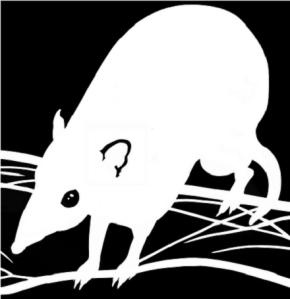
Can we return fauna to revegetation sites with the addition of refuges?
Coarse woody debris (CWD) is a critical functional and structural component of forest and woodland ecosystems, providing habitat for many species. Loss of CWD in these landscapes can lead to a decline in species diversity and abundance, therefore is an important consideration in forest and woodland restoration. Parts of Chingarrup Sanctuary in southwest Western Australia were revegetated 20 years ago. About 5 years after planting, piles of large mallee roots were added to the landscape as potential fauna habitat and seed accumulation sites. This project will investigate small vertebrate activity around ~50 of these coarse woody debris piles to determine their value for return of fauna to revegetated landscapes. You will use cameras to identify fauna species present and compare their activity with landscape features.
The project suits a mid-year start (July). Further information, contact Trish Fleming or Tenaya Duncan.
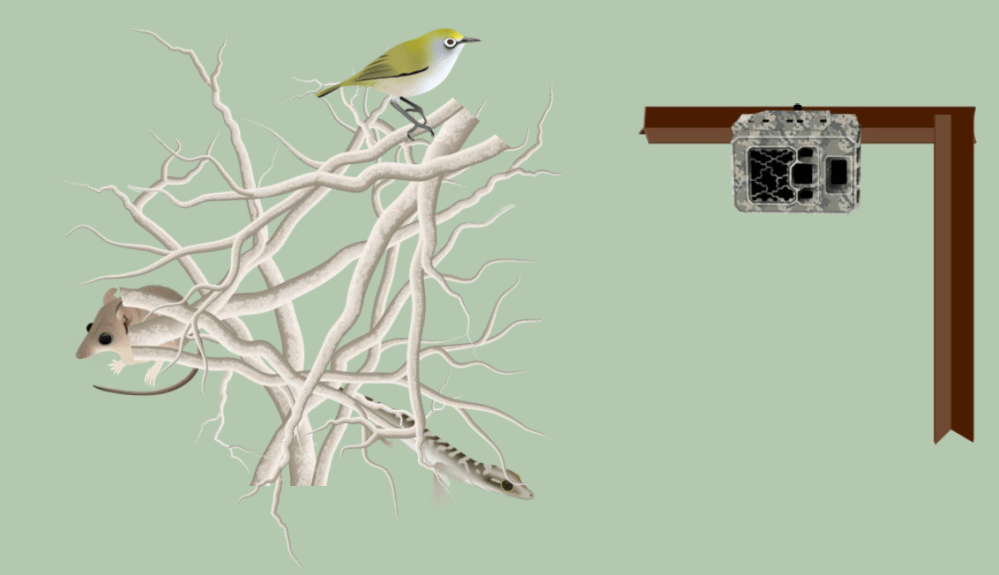

Windfarms and wildlife: what data do we need?
Wind energy is a significant component of Australia’s commitment to renewable energy. While this transition is vital to reduce the cumulative impacts of infrastructure and climate change on ecosystems, there remain significant knowledge gaps around the likely impacts of this transition to green energy on Australian wildlife. Assessment of potential impacts on birds and bats due to wind turbine collision is undertaken as part of the assessment of the Matter of National Environmental Significance (MNES) under Commonwealth legislation (EPBC Act) and the different states legislations (EP Act for WA etc) during their environmental impact assessment (EIA) for proposed wind farms. Such data can be validated against post-construction mortality monitoring at operating wind farms. The proposed PhD projects aim to address some of the knowledge gaps around these processes.
- Can wind turbine impacts be detected using landscape-level bioacoustic monitoring methods? Audio recording analysis has huge potential for understanding biodiversity across large landscapes. Using a before-after control-impact experimental design, this project will examine the use of passive acoustic recording to assess the changes in biodiversity associated with construction of wind turbines.
- What’s the best way to detect and assess potential impacts on bats? Acoustic recording is an important method used for the detection and understanding of bat activity. However, previous data has shown that pre-construction assessments of bat species presence and activity are not correlated with collision impacts post-construction revealed through mortalities. This suggests that our methods of auditory assessment have limitations that are not being addressed adequately through EIA assessments. This project will examine detectability of different bat species using various survey methods, to inform collision risk modelling.
- Does increasing light infrastructure impact ecosystem function? In birds, artificial light at night (ALAN) has been linked to activity changes such as delayed sleep onset, increased nocturnal awakenings, vigilance, and night vocalisation with direct fitness costs. Light, as an attractant, also has the potential to impact food webs, luring both prey and predator species to newly lit locations. This project will use a range of methods to address the before and after impacts of ALAN on wildlife at landscape scales to inform adaptive management practices.
These PhD projects are open to domestic students interested in wildlife and conservation sciences. Applicants must be full time and meet the admission requirements of the required HDR degree to be eligible (first or upper second-class Honours degree, Masters degree by research, or equivalent). Please contact us early to discuss your application Trish Fleming
Snap-Cat! monitoring feral cats around quokka habitat
Feral cats can be difficult to monitor and control due to neophobia and trap avoidance behaviour, resulting in low detection rates and variable success of control measures. We will test a novel, long-life (up to 1 year) lure system to increase camera trap success and reduce neophobic behaviour of cats. Using this lure, we will develop a monitoring system to record feral cat activity, comparing between three camera types and identifying individual cats from distinctive markings. Please contact Trish Fleming, Melissa Thomas.
Long-life lures for pest detection and monitoring
Lures are used to attract animals for surveillance or monitoring purposes. Historically, these lures are food-based and short-lived (2 weeks). Developments in remote communications now means that traps are becoming more autonomous and can be left out for longer periods of time with little to no maintenance required. One of the current shortfalls relating to these autonomous traps is the continuous need to replace the trap lure. Such a lure would significantly decrease operational costs associated with refreshing lures and increase the effectiveness of the control/monitoring operations by ensuring that the lures are always optimally attractive to target animals. This project will trial New Zealand-developed long-life block lures to assess the effectiveness and longevity of the lures in attracting invasive rodents in Australia. Further information, contact Melissa Thomas.
Do livestock guardian dogs pose a risk for wildlife?
Livestock guardian animals are increasingly important for the protection of livestock against predators. In Australian rangelands, Maremma sheepdogs guard sheep against predation by dingoes, therefore playing an important role in ensuring the livelihoods of livestock producers, reducing the need for lethal dingo control to protect livestock. However Maremmas could also pose a threat to wildlife in their own right. While the sheepdogs are regularly fed, they could also predate on wildlife, as has been demonstrated in South Africa (Drouilly et al 2020; Smith et al. 2020). This study will investigate the diet of free-ranging Maremmas on pastoral properties in the Southern Rangelands of Western Australia. The project will involve both field work for collection of samples, and laboratory analyses of diet.
Further information, contact Trish Fleming.
Personality syndromes and predator cues
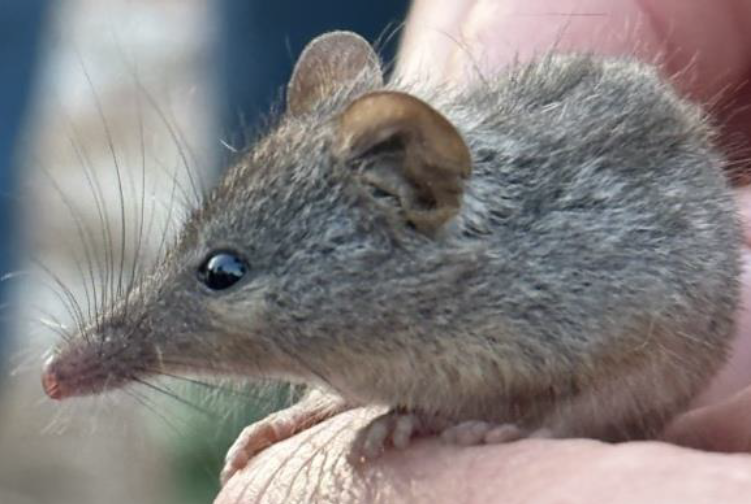
Individuals of many taxa show consistent personality types (‘shy’, ‘bold’): the aim of this experiment is to explore how exposure to a predator cue (scent) influences behaviour of ash grey mice: do bold animals remain bold? Do shy animals become shyer? The experiment will involve behavioural syndrome testing and measuring of ventilatory behaviour of mice exposed to various odours.
Further information, contact Bill Bateman or Christine Cooper
Evolutionary Anatomy and Behaviour in Black Cockatoos
Three species of Black cockatoos are found in South West Western Australia. The endangered Carnaby’s cockatoo and Baudin’s cockatoo, and the vulnerable forest red-tailed black cockatoo. The three species overlap in their geographic ranges to some extent, and utilise parts of the Perth metropolitan area at various times of the year for both foraging and roosting. The selection of food items and biomechanics of feeding are known (to some extent) to be different between species, and various other differences between species behaviour has been noted. However, detailed comparative anatomy is lacking. This project will undertake a detailed study of the link between form and function in this iconic group of birds, using detailed dissection, modern geometric morphometric methods and behavioural analysis.
Further information, contact Natalie Warburton.
Invertebrate Autotomy
Autotomy is a dramatic and extreme response to predation whereby organisms shed part of their body to avoid entrapment or predation. Although the benefit of autotomy is survival, the costs to locomotion, energy stores, mating ability and inter and intra specific competition are varied and less well-understood. This project will be a laboratory and field-based eco-physiology and behavioural ecology project that will aim to explore the energetic and behavioural costs of limb autotomy in a range of invertebrate taxa. Topics to be explored include: physiological effects of autotomy for taxon with leg specialisation, costs of autotomy with predation mode, physiological costs of autotomy at different ontogenetic stages (species with and without regeneration), the effect of autotomy on immune reaction (encapsulation of foreign bodies) and interaction between predators and prey that can both autotomise.
Further information, contact Bill Bateman.
Sexual dimorphism in the skeleton of Bobtail lizards
Many species of vertebrates exhibit differences in morphology between the sexes (sexual dimorphism) that can be related to various aspects of reproductive biology. In species that give birth to relatively large young, the skeleton and most obviously the pelvis of the female is often modified (e.g. humans, chimpanzee and horses). Sexual dimorphism in relative snout-vent length has been report in a range of reptile species. The bobtail lizard, however, is not known to exhibit obvious sexual dimorphism and determining the sex of individuals in the field is challenging. This project will utilise linear and 3D measurements of the pelvis digitised from ct scans to investigate if sexual dimorphism is present in the pelvis of bobtails and whether such measurements can be extrapolated to help in the identification of sex in animals in the field.
Further information, contact Natalie Warburton.
Evolution of locomotion in bandicoots (PhD)
Working with Riversleigh bandicoot skeletons (Miocene) to retrace the evolution of locomotion in this important marsupial group.
Further information, contact Kenny Travouillon at the WA Museum
Other projects
Assessing the fitness consequences of parasites in Tiger snakes
Links between seed banks and above ground vegetation across an urban matrix. Contact Bill Bateman
Genetic connectivity of urban reptile populations. Further information, contact Bill Bateman
 westernWEB