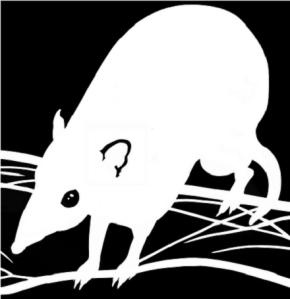
Locomotion in marsupials
Marsupials represent the dominant mammalian fauna of the Australian-Pacific region. Over their 150 million-year history they have diversified into hundreds of species filling ecological niches from tiny honey possums to extinct giant herbivores, and burrowing wombats to gliding insectivores (Archer and Hand 2006). Often, similarities between marsupial and placental mammal body forms have been taken to represent examples of evolutionary convergence. However, underlying differences in anatomy and development from their divergent evolutionary histories are likely to constrain the extent to which marsupials and placentals can truly evolve similar solutions to the same mechanical problems. To understand why and how such diversity evolved, we first need a comprehensive knowledge of the anatomy of living marsupial forms. Our research group is at the forefront of research in this area.
- Covariation between forelimb muscle anatomy and bone shape in an Australian scratch-digging marsupial: Comparison of morphometric methods. Journal of Morphology. 2019; 280: 1900–1915. https://doi.org/10.1002/jmor.21074
- The skeleton of the Thylacine
- And applying our knowledge to describe extinct marsupials like Congruus kitcheneri and Giant tree-kangaroos that once lived all over Australia.
One of our current projects is to comprehensively describe and compare the muscles of the pelvic and thigh region across a wide diversity of marsupials from throughout Australia and the Pacific. This will involve collecting three-dimensional (3D) scans using micro-Computed Tomography (CT) of marsupial cadavers that have been stained using iodine as a contrast agent to improve visualisation of soft tissues including muscle fibres. We already have specimens of many species but require funding to enable micro-CT scanning and digital processing of scans. Once scanned, anatomical dissection of specimens will enable the interpretation of the scans and the generation of a digital library of the anatomy of this region. This data will provide a baseline for answering many questions of the evolutionary history of marsupials and provide data for the analysis of both living and extinct species.
Skulls and Teeth
The link between structure and function in animal bodies is beautifully demonstrated in the wide range of shapes of skulls and teeth, and the muscles that move the jaws for catching and eating prey.
- More than one way to eat a mouse: Skull shape variation carnivorous marsupials
- Comparative three-dimensional jaw muscle anatomy of marsupial carnivores and the termite-eating numbat. https://doi.org/10.1002/jmor.21684
- Myology of the masticatory apparatus of herbivorous mammals and a novel classification for a better understanding of herbivore diversity
- Ontogenetic shift in diet of a large elapid snake is facilitated by allometric change in skull morphology
- Diet and bite force in red foxes: ontogenetic and sex differences in an invasive carnivore
- The anterior nasal region in the Red Kangaroo (Macropus rufus) suggests adaptation for thermoregulation and water conservation
Sexual selection
Studies of sexual selection have tended to concentrate on obvious morphological traits (think about fancy tails, crests, horns, antlers etc). However, traits that show no obvious sexual dimorphism may nevertheless still be under sexual selection. One of the most important avenues to competing for a mate is tiny: sperm!
- Male roos fight with each other from youngsters, which helps them build up the strength they need to fight over females as adults. We examined the relative size of forelimb muscles in male and female kangaroos, and revealed strong sexual selection in males.
- And found that there isa trade off between sperm swimming speed and muscularity in kangaroos, Biological Journal of the Linnean Society, Volume 123, Issue 2, February 2018, Pages 431–444, https://doi.org/10.1093/biolinnean/blx151
Antipredator behaviour
Flight initation distance (FID) and vigilance has been used by many researchers to explore how organisms assess risk and there are many papers out there attesting to the value of this simple metric. We have now produced several papers on escape behaviour in animals ranging from tortoises to frogs, birds, mammals, tadpoles and grasshoppers.
An extreme way of avoiding being dinner is to sacrifice part of your body to escape predation: many taxa will voluntarily drop an appendage when caught or threatened by a predator, a process called ‘autotomy’ (self-cutting), often along a breakage plane to aid rapid shedding of the leg, tail, antenna etc. Autotomy has fascinated us as, although the benefit (survival) seems huge, there are also costs. Losing a leg can make you slower; losing a tail can rob you of fat stores, or alter your locomotion.
-
PhD candidate Natasha Tay quantified the escape behaviour of eight CWR marsupial taxa (three quadrupedal bandicoots and five bipedal macropods) to determine if differences in how they escape from predators indicate their ability to respond appropriately and effectively to introduced predators.
- Students associated with wWEB presented a Tadpole escape behaviour poster at the international Behaviour2015 conference in Cairns
Putting the FUN in Functional Morphology
-
Anatomy of the cavernous muscles of the kangaroo penis highlights marsupial–placental dichotomy
-
Extreme bilateral polydactyly in a wild-caught western grey kangaroo
-
Keeping an ear out: size relationship of the tympanic bullae and pinnae in bandicoots and bilbies (Marsupialia: Peramelemorphia)
-
New Guinean bandicoots: New insights into diet, dentition and digestive tract morphology and a dietary review of all extant non-Australian Peramelemorphia
 westernWEB