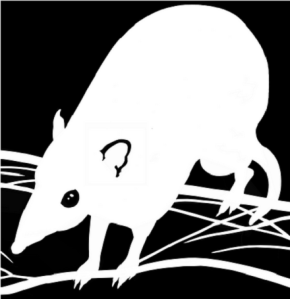
From the compact, robust skull of a bandicoot to the long, narrow skull of its relatives, the extraordinary diversity of these Australian and New Guinean marsupials tells an evolutionary story spanning millions of years.
New research led by Dr Meg Martin, with Jo Menard, Dr Kenny Travouillon and Associate Professor Natalie Warburton, has explored how the skulls of bandicoots and bilbies have evolved across Sahul, the landmass encompassing Australia and New Guinea. Published in the Zoological Journal of the Linnean Society, the study examined 127 specimens representing 25 living and extinct species using three-dimensional geometric morphometrics.
More than just different-sized bandicoots
The researchers found striking differences in skull shape between species and genera. Isoodon, the short-nosed bandicoots including our local Quenda, sits towards one end of this spectrum with relatively short, robust skulls, while Perameles and New Guinean species tend towards longer, narrower skulls. The extinct pig-footed bandicoots, Chaeropus, were particularly distinctive.
Importantly, these differences cannot simply be explained by animals getting bigger or smaller. While size contributes significantly to skull shape, substantial differences remain when the effects of size are taken into account. The study also found sexual dimorphism in skull size rather than skull shape.
An evolutionary response to a changing continent
Perhaps the most interesting result is the relationship between skull shape and environment. Climate, geography and size together explained 35% of variation in cranial shape, with climate alone accounting for 13%. Latitude emerged as the strongest individual environmental predictor. Skull shape also retained a significant phylogenetic signal, showing that evolutionary history remains embedded in the anatomy of these animals.
Together, the findings suggest that cranial shape, rather than simply body size, has been a major axis of adaptive diversification in bandicoots and bilbies. The diversity seen today reflects a combination of ancestry, environment and ecological opportunity across Sahul.
The inclusion of extinct taxa adds another dimension to the story. Modern species represent only part of the morphological diversity produced during peramelemorphian evolution, highlighting the importance of fossils and museum collections for reconstructing how Australia’s distinctive mammal fauna evolved.
The research brings together expertise from Murdoch University and the Western Australian Museum, demonstrating how anatomical collections, fossils and modern 3D analytical approaches can reveal evolutionary patterns that are difficult to see from living species alone.
Read the full paper: “Continental-scale adaptive radiation in bandicoots and bilbies (Marsupialia: Peramelemorphia) revealed by cranial shape”, published in the Zoological Journal of the Linnean Society.
Read the research paper

