
By Tenaya Duncan. When we think about supplementing natural shelters for wildlife that have been lost, we often think about what ‘house’ is most suitable, rather than whether predators will invite themselves in.
Artificial refuges are human-made structures designed to supplement natural refuges that have been lost due to habitat modification. They have been used worldwide in restoration efforts to offset the loss of natural refuges in various disturbed landscapes, supplementing the habitat of fauna. These structures, which can range from log piles to 3D-printed rocks, are designed to supplement the shelter for small mammal and reptile species. But what if these refuges are inviting more than the wildlife we are trying to help?
To investigate this, we monitored feral cat activity around three artificial refuge types, wooden pallets, corrugated iron sheets and log piles in semi-arid Western Australia. Using camera traps, I had the mind-numbing task of individually identifying cats (named after Freo players for my own sanity) to assess the activity patterns of individuals and the general behaviour of cats at these structures.
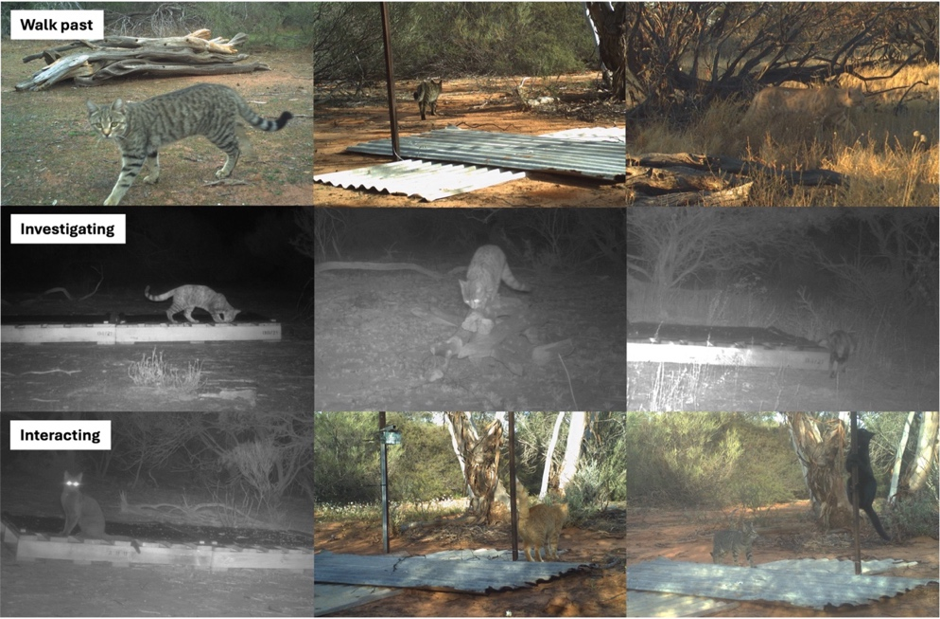
Interestingly, cats were not equally interested in all refuges. Compared to the control, where no artificial refuge was deployed, cat activity was greater around pallets and iron sheets, whereas log piles attracted little interest. Cats were the usual curious creatures, often investigating and interacting with all three structures and repeatedly visiting them. Kittens in particular enjoyed playing in and on the pallet refuges.
The most interesting finding, however, was that there was no such thing as the ‘average’ cat. By identifying individuals by their coat patterns, we were able to assess whether cats behaved the same or showed preferences. Some cats were observed repeatedly visiting different structures; some preferred to be repeat offenders at wooden pallets and iron sheets, while others showed little interest. For example, Jlo (named after Justin Longmuire, not the singer) was often observed re-visiting pallets and iron sheets, whereas Sonny was often observed revisiting iron sheets and log piles. This demonstrates that cat behaviour was not consistent across the population, and that reporting the average response of predators may mask differences among individuals.
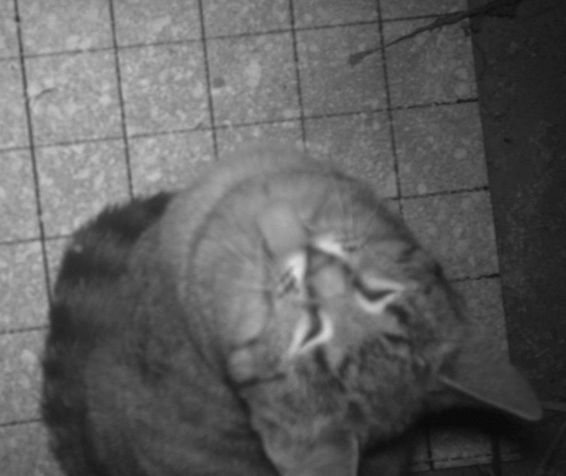
Artificial refuges remain an important conservation tool, but this study demonstrated that understanding who the unwanted visitors are is just as important to understand as understanding how our target landowners (mammals and reptiles) use them. Structures designed to help native wildlife may unintentionally create focal points for predators, increasing the risk that refuges function as ecological traps rather than safe havens. At the same time, these predictable visitation patterns may provide opportunities for more targeted predator monitoring and management.

