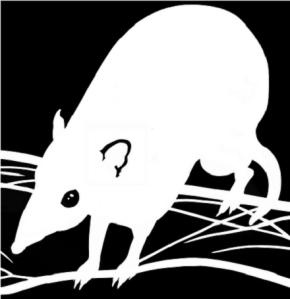
When we think about differences between males and females, size is usually the first thing that comes to mind. In many of Australia’s carnivorous marsupials, males are larger than females, sometimes dramatically so.
But are they simply scaled-up versions of females?
Our recent study examined skull shape in a range of dasyurid marsupials, including quolls, dunnarts and their relatives, using three-dimensional geometric morphometrics. Rather than asking whether males are bigger, we asked whether males and females are built differently.
The answer was: sometimes.
Some species showed only subtle differences between the sexes, while others exhibited marked divergence in skull shape. Interestingly, many of these differences occurred in regions associated with jaw musculature and feeding performance, suggesting that the forces driving sexual dimorphism may extend beyond body size alone.
Why does this matter?
Because sexual dimorphism can provide valuable clues about the evolutionary pressures acting on species. Differences between males and females may arise through competition for mates, ecological differences in resource use, or a combination of both. By studying these patterns, we can better understand how anatomy evolves in response to competing demands.
More broadly, the study highlights that evolution often acts on shape as well as size. Looking beyond simple measurements can reveal a much richer picture of how biodiversity is generated and maintained.
Reference
Warburton NM, Withers PC. (2026) Sexual dimorphism of craniodental morphology for Australian carnivorous marsupials (family Dasyuridae). Australian Zoologist 45, AZ26030. https://doi.org/10.1071/AZ26030
 westernWEB