Bringing anatomy, function and evolution into the classroom
By Associate Professor Natalie Warburton
These classroom resources use specimens, models, images and research examples to help students explore biological concepts through observation and investigation. Developed through research on Western Australian animals at Murdoch University, the activities encourage students to move beyond identifying structures to ask how anatomy works, why structures differ, and what biological evidence can tell us about function, development and evolution.
The activities are designed to complement the Western Australian Science and Human Biology curricula and make use, wherever possible, of materials already available in school science collections, including anatomical models, skeletons, skulls and preserved specimens.
Activities generally follow an observe → compare → interpret → explain approach, encouraging students to distinguish what they can see directly from the biological explanations they draw from those observations.
Student worksheets are accompanied by teacher notes with suggested responses, discussion points and guidance on common misconceptions.
EVOLUTION AND NATURAL SELECTION
ADAPTATION, FEEDING AND FUNCTIONAL MORPHOLOGY
What mammal skull is that?
Suggested level: Years 8–9
Central question: Can you determine what an animal eats by examining its skull?
Students investigate mystery mammal skulls and use several independent lines of anatomical evidence to infer whether each animal is primarily herbivorous, carnivorous or omnivorous.
The investigation considers four major features:
- Teeth: including canines and the different roles of premolars and molars in grasping, shearing, crushing and grinding.
- Jaw-muscle development: using the zygomatic arch and sagittal crest as evidence of muscle attachment.
- Temporomandibular-joint position and mobility: comparing jaw arrangements suited to shearing with those allowing grinding movements.
- Orbit position: exploring the potential advantages of overlapping visual fields or a wider field of view.
An omnivore provides a deliberate challenge to simple herbivore-versus-carnivore rules. Students must weigh several pieces of evidence rather than classify a skull from a single feature.
Resources:
Read the research story Skull shape evolution in carnivorous marsupials
SIMILAR SKULLS DIFFERENT ANCESTRY: CONVERGENT EVOLUTION
Suggested level: Year 10 and senior Biology
Central question: If two animals look remarkably similar, does that mean they are closely related?
Students compare skulls of the thylacine, Thylacinus cynocephalus , and the domestic dog, Canis familiaris. Dorsal, lateral and ventral views highlight anatomical differences associated with marsupial and eutherian lineages.
Students first examine broad similarities associated with carnivory, including skull shape and dentition, before looking more closely at features such as the nasal bones, palate, lacrimal region, infraorbital foramen, angular process and auditory region.
The investigation introduces convergent evolution by asking students to distinguish similarities associated with comparable functional demands from anatomical characters that provide evidence about ancestry.
It provides a natural progression from What mammal skull is that?: students first learn that anatomy can reveal function, then discover that similar function can sometimes produce similar anatomy in distantly related organisms.
Resources:
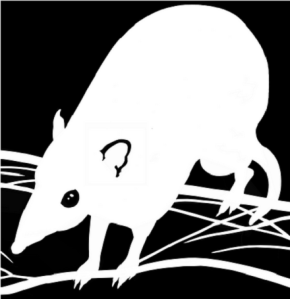
BUILT TO DIG: bandicoot arms
Suggested level: Years 8–10
Central question: How can digging behaviour shape the evolution of the mammalian forelimb?
Students investigate adaptations for digging by comparing forelimb proportions, bone robustness, muscle-attachment areas, elbow leverage and the structure of the hand. They use anatomical evidence to explain how natural selection can favour combinations of features that improve performance under particular functional demands.
Resources:
STRUCTURE AND FUNCTION
ANATOMY OF THE HEART: five slices through a heart
Suggested level: Years 11–12 Human Biology
Central question: How does the structure of the heart allow it to move blood in one direction under pressure?
Students work through five serial cross-sections of a greyhound heart, moving from the base to the apex. They identify chambers, valves, chordae tendineae, papillary muscles, the interventricular septum and ventricular walls, while reconstructing how each two-dimensional section fits into the three-dimensional organ.
Rather than simply labelling structures, students use differences in ventricular wall thickness, valve anatomy and internal muscular structures to explain pressure generation and one-way blood flow.
Resources:
GROWTH AND DEVELOPMENT
DEVELOPMENT OF THE SKELETON: How old is that puggle?
Suggested level: Years 8–10, with extension to senior Human Biology
Central question: Can the age of an animal be estimated from its skeleton?
Based on Murdoch University research into skeletal development in the short-beaked echidna, this activity introduces students to ossification, skeletal maturation and developmental milestones. The underlying study followed known-age echidnas from 40 to 1,315 days after hatching and documented when bones appeared, developed and matured.
Students compare a developmental series of radiographs, arrange specimens from younger to older, identify the anatomical evidence supporting their decisions and construct a simple skeletal ageing guide.
The activity also explores an important developmental principle: different parts of the body do not necessarily mature at the same rate. In the echidna study, the forelimb and hand matured relatively rapidly compared with other parts of the skeleton, providing an opportunity to consider links between developmental timing and functional demands such as digging.
The investigation connects developmental biology with authentic applications in wildlife veterinary care, rehabilitation and conservation.
Resources:
DEVELOPMENT, FORM AND FUNCTION
Central question: Does an animal simply get bigger as it grows?
Suggested level: Years 9–10 and senior Biology
Growth is not always a matter of making the same body shape larger.
This extension brings together the echidna skeletal-ageing investigation with research on ontogenetic change in snake skull morphology and diet. Students compare two different developmental processes:
- Skeletal maturation: bones appear, enlarge and mature through a developmental sequence.
- Allometric growth: different anatomical dimensions change at different rates so that body proportions alter during development.
Students consider how changing proportions can change function, including how changes in skull morphology may allow an animal to handle different prey as it grows.
Resources:
HOMEOSTASIS AND BODY SYSTEMS
KIDNEY STRUCTURE AND FUNCTION
Suggested level: Years 11–12 Human Biology
Central question: How does the kidney regulate the internal environment?
Using commonly available kidney and nephron models, students trace separate pathways for blood, filtrate and urine. They connect gross kidney anatomy with nephron organisation and investigate filtration, selective reabsorption, secretion, water balance and excretion.
The activity places particular emphasis on following a substance through the system rather than simply identifying parts of the nephron. Students consider why glucose enters the filtrate but is not normally lost in urine, how the cortex and medulla contribute differently to kidney function, and how ADH alters water recovery during water excess and dehydration.
Short physiological scenarios allow students to apply normal kidney function to abnormal findings such as glucose or large proteins in urine.
Resources:

