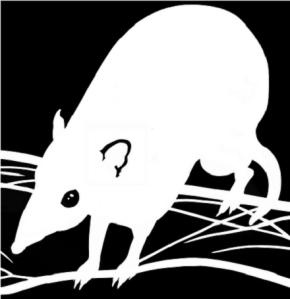
By Gill Bryant. Quenda are fantastic urban adapters, persisting in and around cities and towns across southwest Western Australia (WA). Quenda play an important role as ecosystem engineers by modifying their environment well out of proportion to their body size, where a single quenda can excavate 3.9 tonnes of soil each year digging for their…
Category: Wildlife biology & management
High density housing: Termite mounds are more than just lumps of dirt
By Trish Fleming. Termites are amazing ecosystem engineers – they create massive changes in ecosystems that are far out of proportion to their size. A recent paper by Thompson and Thompson (2015; Pacific Conservation Biology) has captured how important termite mounds are for the Australian landscape. At their study site in the Pilbara region of Western…
It’s getting hot in here: Reptile assemblages in drought-affected forest
By Shannon Dundas. In the past 50 years, the climate in southwest WA has become hotter and drier [1, 2]. Annual rainfall in the northern jarrah forest has decreased by 17% since the 1970s [3]. In addition to the direct effects, changing climate is having a substantial impact on wildlife species through changes in habitat….
Hormones gone wild
By Stephanie Hing. Hormones, neurochemical signaling substances, are in charge of everything we do. From the time you got up in this morning to when your head hits the pillow tonight (and as you sleep), hormones will be working hard to keep you alive. They coordinate all the systems in our bodies from digesting food…
Some like it hot: Temperature-dependent Sex Determination (TSD) in reptiles
by Ash Wolfe. Did you know that the surrounding atmospheric temperature of an egg can influence whether a reptile will hatch as a boy or a girl? This is most common in turtles and crocodylids, but also occurs in tuatara and some other lizards. So, rather than genetic sex determination (GSD; like in humans,…
Welcome to Western WEB
Western Australian researchers have joined forces to create the WWEB. Working across urban, agricultural and natural landscapes, we investigate how animals respond to human presence, but can also contribute to our quality of life. We are wildlife biologists. Our research focuses on translational biology, where improving our understanding of the physiology and behaviour of vertebrates…
 westernWEB